
Heating, ventilation, and air conditioning (HVAC) systems are essential to modern comfort. Whether cooling a home, ventilating a commercial building, or maintaining temperature-sensitive environments, HVAC equipment relies on electrical systems that must operate safely and reliably. As technology advances and equipment becomes more sophisticated, it’s important to periodically revisit the fundamentals—especially when it comes to short circuits, ground faults, and overload protection.
Understanding these basic electrical concepts can help technicians, facility managers, and homeowners better appreciate how HVAC equipment is protected from damage and how safety is maintained.
Why Electrical Protection Matters
HVAC equipment contains motors, compressors, fans, control circuits, and other electrical components that are subject to a variety of electrical hazards. Without proper protection, faults can result in equipment failure, costly repairs, downtime, fire hazards, or even personal injury.
Three of the most common electrical conditions that protection devices are designed to address are:
- Short circuits
- Ground faults
- Overloads
While these terms are often used together, they represent different electrical problems and require different protective measures.
Short Circuits: When Current Takes the Wrong Path
A short circuit occurs when electricity finds an unintended path with little or no resistance. Instead of flowing through the normal load, such as a motor winding or compressor, current bypasses the intended circuit and rushes through a direct connection.
Common Causes of Short Circuits
- Damaged wire insulation
- Loose electrical connections
- Pinched or cut conductors
- Failed components
- Moisture intrusion
The Risks
Short circuits can generate extremely high currents in a fraction of a second. These fault currents can:
- Damage equipment
- Melt conductors
- Cause arc flashes
- Start electrical fires
Protection Against Short Circuits
HVAC systems rely on protective devices such as:
- Fuses
- Circuit breakers
- Motor circuit protectors
These devices are designed to interrupt fault current quickly before significant damage occurs.
Ground Faults: Electricity Finds a Path to Ground
A ground fault occurs when electrical current flows unintentionally to ground rather than remaining within the intended circuit.
For example, if insulation on a conductor fails and contacts a metal equipment enclosure, current may flow through the metal housing and ultimately to ground.
Common Causes of Ground Faults
- Deteriorated insulation
- Water or moisture exposure
- Mechanical damage
- Contaminated electrical components
Why Ground Faults Are Dangerous
Ground faults may not always produce the high current levels associated with short circuits. However, they can create serious hazards, including:
- Electrical shock
- Equipment damage
- Fire risks
- Unexpected equipment shutdowns
Ground Fault Protection
Proper grounding and bonding are the first lines of defense. Depending on the installation, additional protection may include:
- Ground-fault circuit interrupters (GFCIs)
- Ground-fault protection systems
- Equipment grounding conductors
Regular inspection of wiring and equipment enclosures helps identify developing ground-fault conditions before they become serious problems.
Overloads: Too Much Work for Too Long
Unlike short circuits and ground faults, overloads occur when a motor draws more current than it is designed to handle over an extended period.
An overload condition doesn’t necessarily indicate a fault in the wiring. Instead, it often results from excessive mechanical or operational demands on the equipment.
Common Causes of Motor Overloads
- Dirty air filters
- Blocked airflow
- Refrigeration system issues
- Bearing failures
- Improper voltage
- Mechanical binding
What Happens During an Overload?
As the current increases, motor windings generate more heat. If the condition continues, excessive temperatures can:
- Break down insulation
- Shorten motor life
- Cause winding failures
- Lead to complete motor burnout
Overload Protection Devices
HVAC motors are typically protected by:
- Thermal overload relays
- Electronic overload relays
- Integral motor protectors
These devices monitor motor current and disconnect power when overheating conditions are detected.
Understanding the Difference
A common point of confusion is the distinction between short-circuit protection and overload protection.
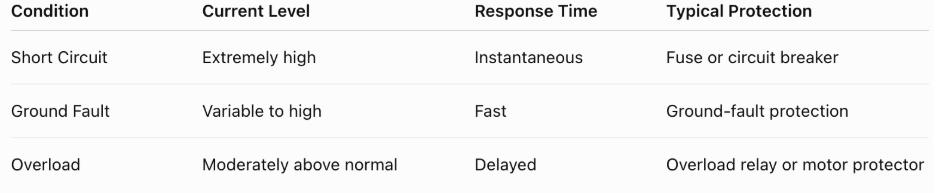
Simply put, fuses and breakers protect conductors and equipment from catastrophic fault currents, while overload devices protect motors from overheating.
The HVAC Motor Connection
Motors are the heart of HVAC systems. Compressors, blower fans, condenser fans, pumps, and air handlers all rely on motor operation.
Because motors experience varying loads during startup and operation, protective devices must be carefully selected and coordinated. Protection that is too sensitive may cause nuisance trips, while insufficient protection can allow costly equipment damage.
Manufacturers provide detailed specifications for:
- Maximum overcurrent protection
- Minimum circuit ampacity
- Overload protection requirements
- Conductor sizing
Following these guidelines is essential for safe and reliable system performance.
Maintenance Still Matters
Even the best protection devices cannot replace preventive maintenance. Regular inspections can identify conditions that often lead to faults and overloads.
Key maintenance practices include:
- Checking electrical connections
- Inspecting wire insulation
- Verifying grounding integrity
- Cleaning coils and filters
- Monitoring motor current
- Testing protective devices
Routine maintenance helps ensure HVAC systems operate efficiently while reducing the likelihood of electrical failures.
Back to Basics, Forward with Confidence
As HVAC systems continue to evolve with smart controls, variable-speed drives, and advanced diagnostics, the fundamental principles of electrical protection remain unchanged.
Short circuits require rapid interruption. Ground faults demand safe grounding and fault detection. Overloads call for thermal protection to prevent motor damage.
By periodically revisiting these basics, technicians and facility professionals can better diagnose problems, improve safety, and extend the life of critical HVAC equipment. Sometimes, the most valuable lessons come from returning to the fundamentals that keep our systems running smoothly every day.
Keep your HVAC running safely with Sunderland Electric—contact us now.