
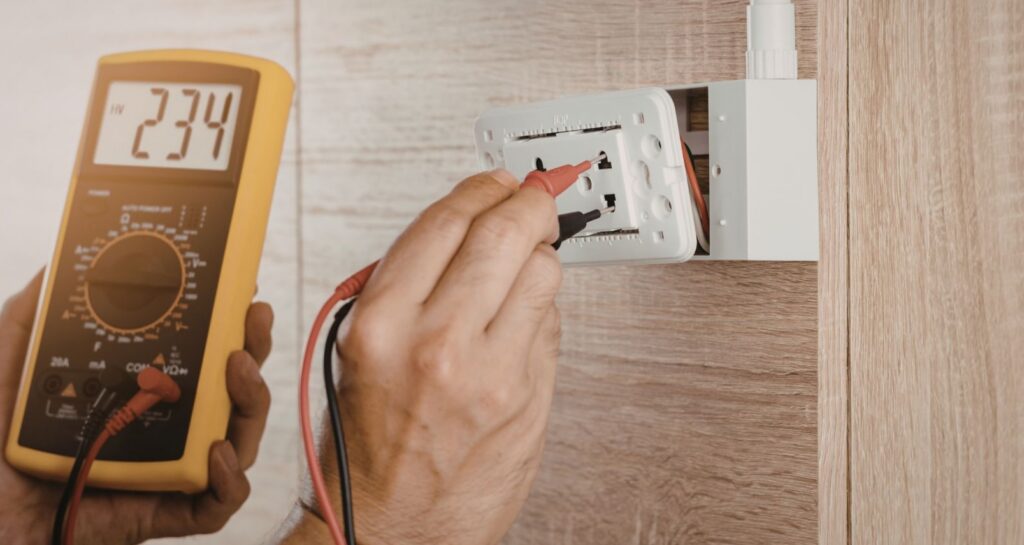
You plug in your phone charger, coffee maker, or laptop—and nothing happens. Naturally, you head to the electrical panel expecting to find a tripped breaker. But everything looks normal.
So why did the outlet stop working?
This is one of the most common electrical problems that homeowners experience. The good news is that a dead outlet does not always mean a major electrical failure. In many cases, the cause is minor and fixable. However, some situations can indicate hidden wiring problems that should not be ignored.
In this guide, we’ll explain the most common reasons an outlet stops working even when the breaker never tripped, how to troubleshoot the issue safely, and when it’s time to call a licensed electrician.
1. A GFCI Outlet Tripped Somewhere Else
One of the most common causes of a dead outlet is a tripped Ground Fault Circuit Interrupter (GFCI) outlet.
GFCI outlets are designed to shut off power when they detect moisture or an electrical imbalance. They are commonly installed in:
- Bathrooms
- Kitchens
- Laundry rooms
- Garages
- Outdoor areas
- Basements
What surprises many homeowners is that one GFCI outlet can protect several standard outlets downstream on the same circuit.
That means your living room outlet may stop working because a bathroom GFCI tripped.
What to Do
Walk through the house and look for outlets with “TEST” and “RESET” buttons. Press the RESET button firmly.
If the outlet immediately trips again, unplug devices connected to that circuit and try once more.
2. A Breaker Looks on but Actually Tripped
Circuit breakers do not always move fully into the OFF position when they trip.
Sometimes the handle sits in the middle, making it appear normal at first glance.
How to Reset It Properly
- Turn the suspect breaker completely OFF.
- Push it firmly back to ON.
- Test the outlet again.
Even if the breaker does not appear tripped, resetting it is often worth trying.
3. A Loose Wire Connection
Outlets depend on tight wire connections to maintain power flow.
Over time, wires can loosen because of:
- Age
- Vibration
- Heat expansion
- Poor original installation
- Heavy appliance usage
A loose connection may interrupt power to one outlet—or several outlets further down the circuit.
Warning Signs
You may notice:
- Flickering lights
- Intermittent outlet operation
- Buzzing sounds
- Warm outlet covers
- Burn marks or discoloration
Loose wiring can become a fire hazard if ignored.
4. The Outlet Itself Failed
Outlets wear out over time.
Frequent plugging and unplugging weaken internal contacts. Older outlets may eventually stop gripping plugs securely or stop conducting electricity entirely.
This is especially common in homes with outlets over 15–20 years old.
Signs of a Bad Outlet
- Plugs fall out easily
- The outlet feels loose
- Only one socket works
- Outlet sparks occasionally
- Burning smell
Replacing a worn outlet is usually inexpensive, but it should be done correctly and safely.
5. A Half-Hot or Switched Outlet Was Turned Off
Some outlets are controlled by wall switches.
These are called switched or half-hot outlets and are commonly found in bedrooms or older homes without ceiling lights.
If the wall switch gets turned off accidentally, part or all of the outlets may lose power.
Quick Test
Flip the nearby wall switches while checking the outlet.
Sometimes the solution is simpler than expected.
6. A Hidden Electrical Problem Exists in the Circuit
If multiple outlets stop working and basic troubleshooting does not help, there may be a deeper electrical issue, such as:
- Damaged wiring
- Backstab connection failure
- Burned wire splice
- Overloaded circuit damage
- Faulty breaker
- Rodent damage inside the walls
These problems can interrupt power without visibly tripping the breaker.
In some cases, the outlet may still show partial voltage, which can create dangerous conditions.
How to Troubleshoot a Dead Outlet Safely
Before attempting repairs, always prioritize safety.
Step 1: Unplug Everything
Remove all devices connected to the dead outlet.
Sometimes a faulty appliance causes the issue.
Step 2: Check Nearby GFCI Outlets
Reset every GFCI outlet you can find.
Step 3: Reset the Breaker
Even if it looks normal, switch it OFF and back ON.
Step 4: Test Nearby Outlets
See whether the surrounding outlets still work.
This helps determine whether the issue affects a single outlet or an entire section of the circuit.
Step 5: Look for Warning Signs
Stop troubleshooting and call an electrician immediately if you notice:
- Burning smells
- Buzzing noises
- Smoke
- Warm outlets
- Scorch marks
- Repeated breaker trips
When to Call a Licensed Electrician
You should contact a professional if:
- The outlet still does not work after resetting GFCIs and breakers
- Multiple outlets lost power
- You suspect loose wiring
- The outlet feels hot
- You see burn marks
- Breakers trip repeatedly
- Your home has older wiring
Electrical troubleshooting sometimes requires voltage testing and inspecting hidden wiring connections.
Attempting DIY electrical repairs without proper knowledge can create shock or fire hazards.
Can a Dead Outlet Be Dangerous?
Yes.
While some dead outlets result from harmless issues like a tripped GFCI, others may signal overheating wires, failing connections, or damaged circuits.
Ignoring the problem could increase the risk of:
- Electrical fires
- Appliance damage
- Power surges
- Shock hazards
If an outlet suddenly stops working and you cannot identify the cause quickly, it is safest to have it inspected.
An outlet that stops working without a tripped breaker is frustrating—but it is also extremely common.
In many homes, the problem is caused by a tripped GFCI, a partially reset breaker, or a worn outlet. However, loose wiring and hidden electrical damage are also possible.
Start with simple troubleshooting steps, but do not ignore warning signs like heat, burning smells, or repeated power loss.
When in doubt, a licensed electrician can diagnose the issue safely and restore power before a minor problem turns into a costly repair.
Keeping your electrical system in good condition is one of the best ways to protect your home, appliances, and family safety.
Contact Sunderland Electric for fast, safe, and professional electrical repair services.