
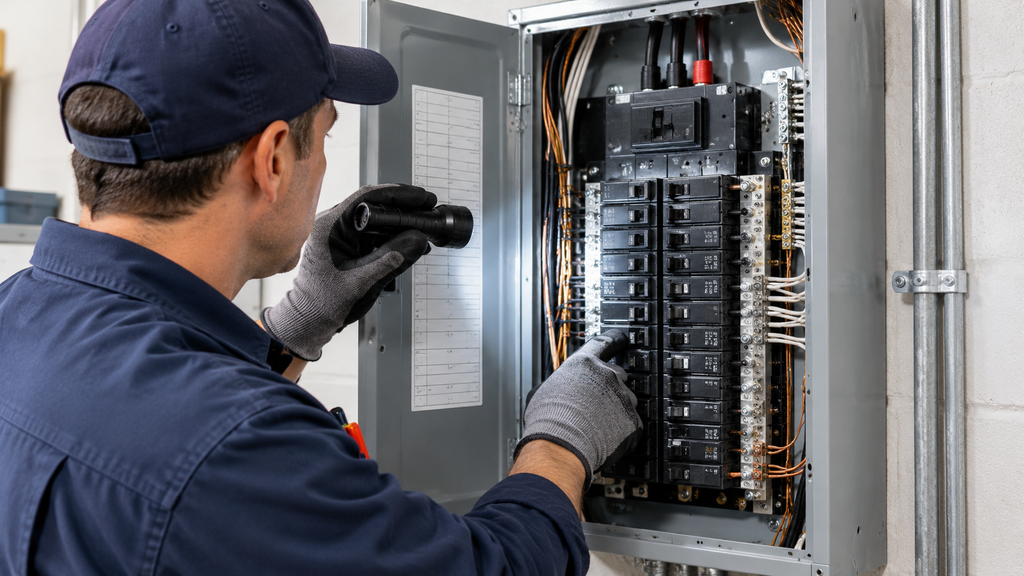
When homeowners think about electrical safety, they often focus on visible problems—flickering lights, tripped breakers, damaged outlets, or power outages. One important part of the electrical system, however, is easy to forget: the electrical panel.
The electrical panel is the central point where electricity enters your home and is distributed to individual circuits. Because it typically sits quietly in a basement, garage, utility room, or other out-of-the-way location, it can go years without receiving any attention.
But like other important components of your home, your electrical panel deserves regular inspection and maintenance.
What Does Electrical Panel Maintenance Involve?
Electrical panel maintenance is more than simply resetting a breaker when it trips. A qualified electrician can inspect the panel for signs of wear, damage, overheating, corrosion, loose connections, and other potential problems.
Depending on the age and condition of the system, maintenance may include:
- Inspecting breakers and electrical connections
- Checking for signs of overheating or burning
- Looking for corrosion or moisture damage
- Checking that connections are properly secured
- Inspecting wiring inside the panel
- Identifying outdated or damaged components
- Checking for signs of overloaded circuits
- Evaluating the panel’s overall condition and capacity
These inspections can help identify developing problems before they become more serious electrical issues.
Why Do Homeowners Overlook Their Electrical Panels?
1. The Panel Usually Isn’t Visible
Unlike a light fixture or electrical outlet, an electrical panel isn’t something homeowners interact with every day. Once the panel door is closed, it is easy to forget that it is there.
A panel that appears fine from the outside may still have issues that require professional attention.
2. Electrical Problems Can Develop Gradually
Not every electrical problem creates an immediate warning. A loose connection, deteriorating component, or overloaded circuit can develop over time.
In some cases, the first noticeable sign may be a warm panel, unusual buzzing, a burning smell, repeated breaker trips, or unexplained electrical problems.
3. Breakers Can Create a False Sense of Security
Circuit breakers are an important safety feature, but they aren’t a substitute for proper electrical maintenance.
When a breaker trips, its job is to interrupt power when it detects certain electrical conditions. If a breaker is repeatedly tripping, simply resetting it without finding the cause doesn’t address the underlying problem.
4. Homeowners Often Wait for a Problem
Many homeowners follow a “if it isn’t broken, don’t fix it” approach with their electrical systems.
The problem is that electrical issues aren’t always obvious. Preventive inspections can help identify conditions that may otherwise remain unnoticed until they cause a failure, equipment damage, or a potentially dangerous situation.
Warning Signs Your Electrical Panel May Need Attention
Your electrical panel should be inspected by a qualified electrician if you notice signs such as:
- Breakers tripping frequently
- Flickering or dimming lights
- Buzzing, humming, or crackling sounds near the panel
- A burning or unusual electrical odor
- Discoloration or scorch marks
- A panel or breaker that feels unusually warm
- Rust or visible corrosion
- Breakers that won’t reset properly
- Repeated electrical problems when using appliances
- An older electrical panel that has not been inspected in many years
These signs don’t necessarily mean the panel needs to be replaced. However, they should not be ignored.
Older Homes May Need Extra Attention
Connecticut has many older homes, and their electrical systems may have been installed when homes had significantly lower electrical demands.
Today’s homes can have substantially more electrical equipment, including central air conditioning, electric heating, heat pumps, EV chargers, computers, home offices, kitchen appliances, and other high-demand equipment.
An electrical panel that was adequate years ago may need to be evaluated as the home’s electrical demands change.
That doesn’t automatically mean a homeowner needs a larger panel. A qualified electrician should evaluate the entire electrical system and determine whether the existing equipment is appropriate for the home’s current needs.
Electrical Panel Maintenance Can Help Prevent Bigger Problems
Routine attention to an electrical panel can help homeowners identify issues before they become expensive or disruptive.
For example, identifying a deteriorating connection or damaged component early may allow it to be addressed before it contributes to more extensive electrical damage.
Maintenance can also give homeowners a better understanding of the condition and capacity of their electrical system—particularly before adding major electrical loads or completing a home renovation.
When Should You Have Your Electrical Panel Inspected?
There isn’t one universal schedule that applies to every home. The appropriate timing depends on factors such as the age of the electrical system, the condition of the panel, the home’s electrical demand, previous electrical work, and whether problems have been reported.
It is especially worthwhile to have an electrician evaluate the panel when:
- Buying an older home
- Selling a home
- Remodeling or adding rooms
- Installing major electrical equipment
- Adding an EV charger
- Installing an electric heat pump or other high-demand equipment
- Experiencing repeated breaker trips
- Noticing unusual sounds, smells, heat, or discoloration
- The panel has not been professionally inspected for many years
Don’t Ignore the Electrical Panel
Your electrical panel may not be the most noticeable part of your home, but it plays a critical role in electrical safety and power distribution.
Regular professional inspection and maintenance can help identify potential problems, keep your electrical system operating properly, and provide homeowners with greater confidence in their home’s electrical infrastructure.
If you live in Connecticut and have concerns about your electrical panel, Sunderland Electric can help evaluate your electrical system and identify potential issues. Whether you are dealing with an existing electrical problem, planning a renovation, or simply want to better understand the condition of your electrical panel, working with a qualified electrical professional is an important step toward maintaining a safe and reliable home.