
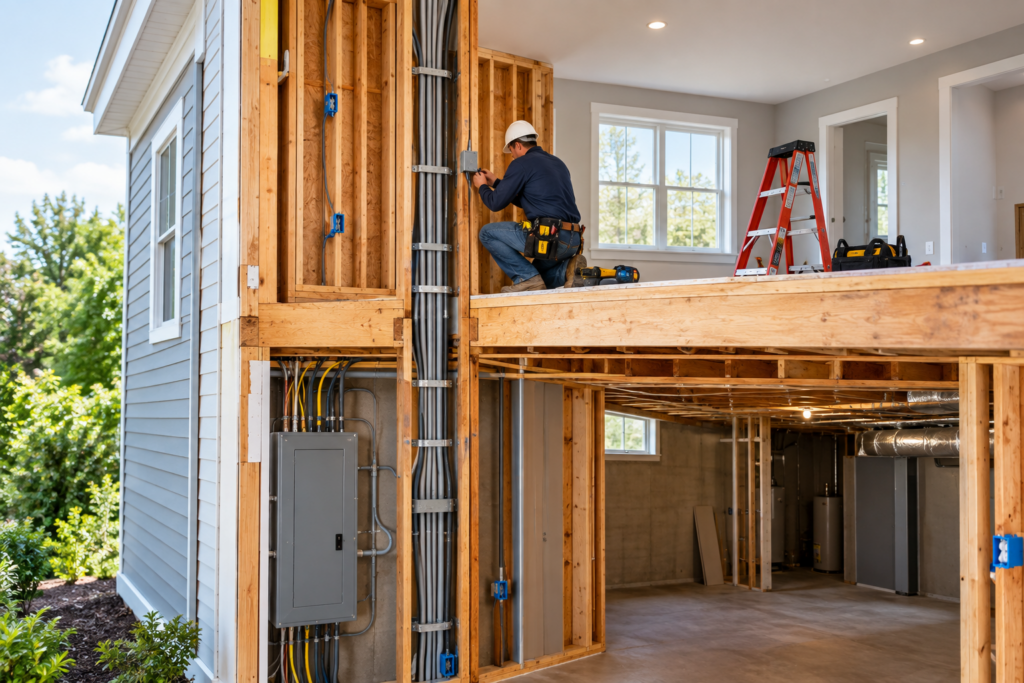
Adding new electrical equipment to an existing home can become surprisingly complicated when the electrical panel is located far from the area that needs power. This is especially true in multi-story homes with finished walls, concrete slabs, basements, crawl spaces, or finished attics.
A simple electrical upgrade can quickly turn into a project involving drywall removal, drilling, patching, and significant labor. One way to make future electrical work easier is to plan by installing a raceway chase between floors.
What Is a Raceway Chase?
A raceway chase is a dedicated pathway that allows electrical wiring or cables to be routed between different levels of a building.
For example, a chase could provide a pathway from a basement or electrical service area to an attic or upper floor. Instead of opening finished walls every time a new circuit is needed, electricians can use the planned pathway to route conductors or permitted cable assemblies.
The concept is particularly useful in homes that may eventually be remodeled or expanded.
Why Supplying New Loads Can Be Difficult
Modern homeowners frequently add electrical loads that were not part of the home’s original design.
These can include:
- Hot tubs and hydromassage tubs
- Electric vehicle charging equipment
- Home offices
- Finished attics or bonus rooms
- Additional air-conditioning equipment
- Electric water heaters
- Kitchen appliances
- Laundry equipment
- Workshop equipment
- Home entertainment systems
The challenge is not simply determining whether the electrical service has enough capacity. Electricians also need to determine how to physically get the required wiring from the electrical distribution equipment to the new load.
When the wiring route passes through several finished floors, accessing that pathway can become the most difficult part of the project.
Why a Raceway Chase Makes Sense During Construction
Installing a raceway or dedicated pathway is generally much easier when a building is being constructed, and framing is exposed.
During construction, electricians can plan a route between floors before drywall, ceilings, flooring, and other finishes are installed. A future pathway can then be incorporated into the building design with appropriate consideration for structural conditions, accessibility, and applicable electrical requirements.
Once the building is finished, creating the same pathway may require opening walls or ceilings.
That difference can have a major impact on the cost and disruption associated with future electrical upgrades.
Think of It as an Electrical “Highway”
A useful way to understand a raceway chase is to think of it as an electrical highway.
The pathway itself doesn’t necessarily determine what future equipment will be installed. Instead, it provides a controlled route that can potentially accommodate future electrical conductors when the need arises.
For example, a homeowner may not currently need power in an attic. Years later, the attic could become a bedroom, office, media room, or other living space.
Having a planned pathway between the electrical distribution area and the attic can make future conversion significantly easier.
Existing Homes Present a Different Challenge
Installing a new chase in an existing home is considerably more complicated than incorporating one during construction.
Electricians may encounter:
- Finished drywall
- Concrete floors
- Structural framing
- Fire blocking
- Insulation
- Plumbing
- HVAC ductwork
- Limited access
- Existing electrical wiring
- Architectural restrictions
The route that looks straightforward on a floor plan may be very difficult to execute in the field.
Before creating a new pathway, an electrician should evaluate the building carefully and determine where a raceway can be installed without compromising structural components or interfering with existing systems.
Don’t Forget Electrical Code Requirements
A raceway chase is not simply an empty pipe installed wherever convenient.
The installation must comply with the applicable electrical code requirements for the type of raceway, cable, conductors, equipment, and installation method being used.
For example, the National Electrical Code has provisions addressing situations where certain nonmetallic-sheathed cables enter enclosures through raceways. The current NEC treatment is found in Section 312.8(C), Exception No. 1, following changes in article numbering over previous NEC editions.
Requirements can address issues such as:
- Cable protection
- Raceway length
- Cable support
- Accessibility
- Raceway fill
- Protection against abrasion
- Proper fittings
- Sealing or plugging
- Structural considerations
Because code requirements can change between NEC editions and local jurisdictions can have additional requirements, the installation should be evaluated against the code edition adopted where the project is located.
Plan the Chase Around Future Needs
A good raceway chase should be planned with potential future electrical needs in mind.
That doesn’t mean predicting exactly what equipment a homeowner will purchase 10 or 20 years from now. Instead, consider the types of loads that commonly get added to homes.
For example, a designer or electrical contractor might consider future pathways for:
Upper-floor renovations:
A finished attic or bonus room may eventually require additional lighting, receptacles and dedicated circuits.
Bathroom upgrades:
Future remodeling could introduce equipment such as hydromassage tubs or other electrical loads.
EV charging:
Electric vehicles are increasing the demand for dedicated charging circuits and associated electrical infrastructure.
Home offices and technology:
Future occupants may require additional power and communication infrastructure.
Outdoor equipment:
Pool equipment, spas, workshops, and other additions can create electrical demands that weren’t included in the original design.
The Chase Is Only One Part of the Plan
Installing a pathway does not eliminate the need to evaluate the home’s electrical capacity.
Before adding a new load, an electrician should determine whether the existing electrical service and distribution equipment can safely accommodate it.
Depending on the project, that evaluation may involve:
- Identifying the new electrical load.
- Determining the appropriate circuit and overcurrent protection.
- Evaluating existing panel capacity.
- Considering the overall service load.
- Determining the most practical wiring route.
- Checking raceway and conductor requirements.
- Verifying grounding and bonding requirements.
- Obtaining permits when required.
- Completing the installation and required inspections.
A convenient pathway is valuable, but it doesn’t replace proper electrical design.
New Construction Is the Best Opportunity
The easiest time to plan a future raceway chase is before the walls are closed.
Builders, electricians, and homeowners can work together to identify strategic vertical pathways throughout the structure.
Even if the raceway is not immediately needed, planning one during construction can provide flexibility for future renovations.
The relatively small effort involved in planning an accessible pathway can potentially save substantial demolition and reconstruction work later.
What About Remodeling an Existing Home?
If you’re remodeling an existing home, it may still be possible to create a dedicated pathway.
The electrician can investigate areas such as:
- Unfinished basements
- Crawl spaces
- Attics
- Utility rooms
- Closets
- Existing chases
- Accessible wall cavities
The objective is to find the least disruptive route while maintaining compliance with applicable electrical and building requirements.
In some cases, installing a new pathway during a major renovation may be worthwhile even if you don’t immediately need it.
Think Beyond Today’s Electrical Needs
Homes continue to evolve. A room that is storage today could become an office tomorrow. A standard bathroom could eventually receive upgraded equipment. A garage could become an EV charging area or workshop.
Electrical systems should therefore be designed with reasonable future flexibility whenever practical.
A properly planned raceway chase can provide flexibility by giving future electricians a defined pathway for electrical distribution between floors.
Adding new electrical loads to a finished multi-story home can be challenging—not only because of electrical capacity, but also because of the physical difficulty of routing new wiring.
A strategically planned raceway chase can provide a practical pathway between floors and reduce the amount of demolition required for future electrical projects.
Whether you’re building a new home or planning a major renovation, discussing future electrical needs with a qualified electrical contractor early in the project can help you identify opportunities to make future upgrades easier, cleaner, and more efficient.
Planning the electrical infrastructure today can make tomorrow’s renovations considerably easier.
Planning a new electrical project or renovation in Connecticut? Contact Sunderland Electric for professional electrical planning, installation, and solutions designed to support your home’s current and future power needs.