
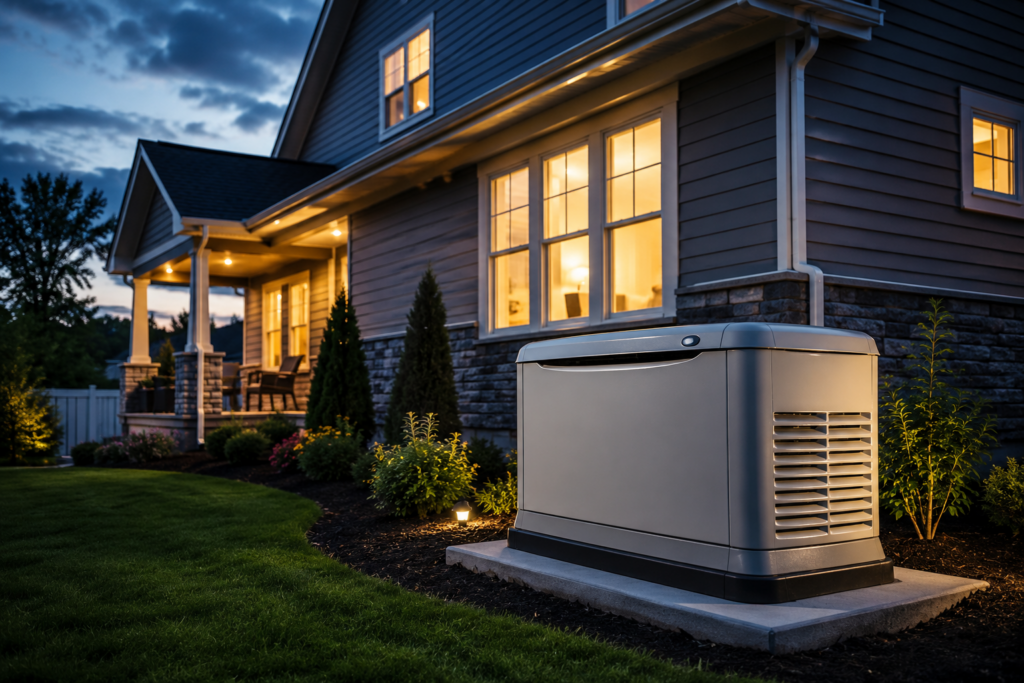
Power outages are becoming more common due to severe weather, aging electrical infrastructure, and increasing energy demand. For many homeowners, a whole-home generator offers peace of mind by automatically restoring power when the grid goes down. But can every house have one?
The short answer is almost yes. While most homes can support a whole-home generator, the installation requirements vary depending on your property’s layout, electrical system, fuel availability, and local building codes. Here’s what every homeowner should know before investing in a standby generator.
What Is a Whole-Home Generator?
A whole-home generator, also known as a standby generator, is a permanently installed backup power system that automatically turns on within seconds of a power outage. Unlike portable generators, standby generators are connected directly to your home’s electrical panel through an automatic transfer switch, allowing them to power essential circuits—or even your entire home—without manual intervention.
These systems typically run on:
- Natural gas
- Propane
- Diesel (less common for residential use)
Can Any Home Install One?
In most cases, yes—but several factors determine whether installation is practical and cost-effective.
1. Available Installation Space
Standby generators require enough outdoor space to safely operate. Manufacturers specify minimum clearance distances from:
- Doors and windows
- Air intakes
- Property lines
- Utility meters
If your yard is very small or your home is close to neighboring structures, installation may require creative placement or a smaller generator model.
2. Fuel Source
The fuel available to your home significantly impacts your options.
Natural Gas
Homes connected to a municipal natural gas line often have the easiest installation because fuel is continuously supplied.
Propane
Homes without natural gas can use propane tanks. These work well in rural areas but require periodic refilling.
Diesel
Diesel generators require on-site fuel storage and are generally reserved for larger homes or commercial properties.
3. Electrical System Compatibility
Older homes may require electrical upgrades before a generator can be safely installed. An electrician will inspect:
- Main electrical panel
- Service entrance
- Grounding system
- Load requirements
The goal is to ensure the generator and transfer switch integrate safely with your existing electrical infrastructure.
4. Generator Size
Not every homeowner needs enough power for the entire house.
A professional load calculation helps determine whether you need to power:
- Essential appliances only
- HVAC system
- Water heater
- Kitchen appliances
- Home office equipment
- Medical devices
- Entire home
Choosing the correct size improves efficiency and avoids unnecessary costs.
Common Challenges
Although most homes qualify, a few situations may require additional planning.
Small Lots
Limited outdoor space may restrict placement options, requiring careful design to meet safety clearances.
HOA Restrictions
Some homeowner’s associations regulate exterior equipment placement, screening requirements, or noise levels.
Local Building Codes
Most municipalities require permits and inspections before installation. These regulations ensure safe fuel connections, electrical work, and proper generator placement.
Fuel Line Capacity
Homes using natural gas may need their gas service upgraded if the existing supply cannot support the generator alongside other gas appliances.
Benefits of Installing a Whole-Home Generator
A standby generator offers much more than convenience.
Automatic Backup Power
The system detects outages and restores electricity within seconds without requiring homeowner intervention.
Protects Critical Systems
Keep essential equipment running, including:
- Refrigerators and freezers
- Medical devices
- Sump pumps
- Heating and cooling systems
- Security systems
- Internet and communication equipment
Prevents Property Damage
Backup power can help prevent:
- Frozen pipes during winter
- Basement flooding
- Food spoilage
- Water damage caused by power loss
Increases Home Value
Many buyers view standby generators as a valuable home improvement, particularly in areas prone to storms or unreliable electrical service.
What Happens During Installation?
A professional installation typically includes:
- Home energy assessment
- Generator sizing
- Permit acquisition
- Fuel connection
- Concrete pad installation
- Generator placement
- Transfer switch installation
- Electrical connections
- System testing
- Final inspection
Depending on permits and site conditions, installation usually takes one to several days.
Is a Whole-Home Generator Worth It?
For homeowners who frequently experience outages, work remotely, rely on medical equipment, or simply want uninterrupted comfort, a standby generator can provide long-term reliability and peace of mind.
While the upfront investment is higher than purchasing a portable generator, the automatic operation, greater power capacity, improved safety, and added convenience often make it a worthwhile investment.
Nearly every home can accommodate a whole home generator with proper planning and professional installation. Factors such as available space, fuel type, electrical capacity, and local regulations will determine the ideal setup, but very few homes are completely unsuitable.
The best first step is scheduling a professional site assessment. An experienced installer can evaluate your home’s specific needs, recommend the appropriate generator size, and ensure the system meets all safety and code requirements. With the right planning, you’ll be prepared to keep your home powered and protected when the next outage occurs.
Ensure your home stays powered through any outage—contact Sunderland Electric today for trusted whole-home generator installation.